Tanzania's national parks are home to some of Africa's most iconic safari experiences, from the Great Migration in the Serengeti to the elephant herds that gather along the Tarangire River. These are the country's protected wild areas, where wildlife, open land, and real safari moments come together in a way that feels very alive. In 2026, these national parks will stand among the best places in Africa for game viewing and varied scenery.
Here is what this read touches on as it moves through Tanzanian National Parks and the experiences connected to them. A quick look at the main takeaways from the content:
Types of wildlife protection areas in Tanzania
Details that make these parks stand out
Northern Tanzania Safari Circuit and their appeal
Other popular national parks across the country
Various Things to do in Tanzania across parks
Important rules followed inside the parks
African Scenic Safaris has been arranging safaris across these parks for 17 years, since 2009, and that time in the field shows up in the details. Not just knowing park names, but understanding how places feel, what makes one park very different from another, and what kind of traveller may enjoy one area more than the next. That kind of experience matters in curating customizable tour packages. It also helps turn general tour ideas into something more practical and personal, which is often what people need when they start planning.
We believe choosing between 22 national parks is the hardest part of planning a Tanzania safari. The breakdown below comes from itineraries we've run and refined since 2009, and it's the same starting point we use when a traveller tells us what they're hoping for.
African Scenic Safaris
What You're After
Pick a month you're traveling, and see which experiences and parks are actually worth it then.
Jan
Feb
Mar
Apr
May
Jun
Jul
Aug
Sep
Oct
Nov
Dec
Show all experiences, any time of year
Nothing lines up perfectly this month — try Show All to see everything.
Types of Wildlife Protection Areas in Tanzania
In Tanzania, wildlife protection zones are divided into four categories. These include national parks, game reserves, conservation areas, and wildlife management areas.
While these areas share some similarities, they differ in their management objectives, regulations, and permitted activities. Here are some of the key differences between national parks, game reserves, and conservation areas:
National Parks
These protected areas are carefully managed to preserve rich biodiversity while providing visitors with experiences immersed in nature. The national parks of Tanzania:
Are managed primarily for wildlife conservation and tourism
Are Large, protected areas, home to diverse flora and fauna
Are regulated on visitor activities, usually limited to game drives and guided walks on Tanzania Wildlife Safari
Game Reserves
These are protected areas where wildlife conservation and recreational hunting harmoniously coexist. With fewer restrictions compared to national parks, you can immerse yourself in the wonders of these reserves, witnessing firsthand the tricky balance between preservation and sustainable hunting practices. Some game reserves found in Tanzania are:
Moyowosi Game Reserve
Grumeti Game Reserve
Kigosi Game Reserve
Maswa Game Reserve
Remember that African Scenic Safaris are dedicated to responsible tourism and ethical wildlife experiences. We do not promote or include hunting in any of our Tanzania Tour Packages. Our focus remains on conservation-driven safaris that support wildlife protection and local communities.
Conservation Areas
The conservation areas in Tanzania are managed primarily for natural resource management, including conservation and sustainable development.
Local communities are often allowed to use local resources sustainably.
These areas may have fewer restrictions on visitor activities than national parks.
The best-known example is the Ngorongoro Conservation Area, where the Maasai continue to live and graze their cattle alongside some of the densest wildlife populations in Africa. It's the clearest illustration of how this model differs from a national park: people and wildlife share the same land rather than being separated from it.
Wildlife Management Areas
Wildlife Management Areas (WMAs) in Tanzania are community-based conservation areas where wildlife and other natural resources are managed by local communities. These areas are essential in promoting wildlife conservation, sustainable land use, and community development in Tanzania.
There are 38 WMAs in Tanzania at various stages of development, covering roughly 29,000 square kilometers. It is about 3% of the country's land. Of these, 17 are fully operational with user rights granted.
The WMAs are spread across the country, with the majority located in northern Tanzania, near the Serengeti ecosystem.
Each WMA is managed by a locally elected committee responsible for managing and regulating the use of natural resources within the area.
Some of the WMAs you may come across when planning a safari include:
Enduimet WMA – In the West Kilimanjaro basin, bordering Kilimanjaro and Arusha National Parks and connecting to Kenya's Amboseli through the Kitenden elephant corridor. Walking safaris here are excellent and far quieter than the main parks.
Burunge WMA – Sits between Tarangire and Lake Manyara, forming a wildlife corridor between the two.
Makao WMA – On the southern edge of the Serengeti ecosystem, close to the Ndutu plains where the wildebeest calving season takes place.
The committee works closely with TANAPA and other conservation organizations. They also ensure that wildlife and other natural resources are conserved while promoting sustainable land-use practices.
Tanzania National Park Entrance Fees and Park Sizes (2025/2026)
Before booking, it helps to know two practical things: how much ground these parks cover, and what it costs to get through the gate. Below are the park sizes and the current 2025/2026 Tanzania National Park Fees structure, including the extra charges that often catch travellers out.
Additionally, it offers comprehensive insights into the fee structures, ensuring visitors are well-prepared for their exploration of Tanzania’s remarkable national parks.
National Parks Area
Tanzania has dedicated over 99,306.5 sq. km. to its national parks, covering more than 15% of the country’s total land. Thus, the area of these parks is of particular significance as it encompasses some of the country’s most stunningly diverse landscapes. Below we’ll highlight the areas of different Tanzania Safari Parks:
African Scenic Safaris — Field Data
Tanzania National Parks, By Area
11 national parks plus 1 additional protected areas, ranked by size. Bars show area relative to Nyerere, the largest.
No parks match your search or filters.
National Park Entrance Fees
Below are the updated Tanzania National Park Entrance Fees for the 2025/2026 season. These rates do not include the 18% VAT. Please note that fees may change at any time based on government regulations. For the latest updates, visit the official website: Tanzania National Parks.
These fees apply to park entry only. Note that the Ngorongoro Conservation Area is not listed above, as it is managed by the Ngorongoro Conservation Area Authority (NCAA) rather than TANAPA and has its own separate fee structure; see the Ngorongoro section and additional fees section below for current rates. Additional charges may apply for Safari Activities such as hiking, trekking, or guided tours. Always check the official website for the most up-to-date information before planning your visit.
Note: Keep in mind that park fees are just one part of what you'll spend; accommodation, vehicle hire, guides, and activities usually make up a much larger share of the total. For a full breakdown by travel style, see our complete guide to Tanzania safari costs.
TANAPA Concession Fees (2025/2026)
Visitors staying in tented camps within Tanzania’s national parks are required to pay an additional Concession Fee. This fee is charged per night and varies by park. Like entrance fees, concession fees also vary by season.
Concession Fees (High & Low Seasons)
National Parks
High Season (July - September) - USD
Low Season (October - June) - USD
Serengeti & Nyerere
$60 (Adult) / $10
(Children 5-15 yrs)
$50 (Adult) / $10
(Children 5-15 yrs)
Lake Manyara, Tarangire, Arusha & Kilimanjaro
$40 (Adult) / $10
(Children 5-15 yrs)
No low season rates
Mahale Mountains, Ruaha, Katavi, Gombe,
Burigi-Chato, Ibanda-Kyerwa, Rumanyika-Karagwe,
Rubondo Island & Saanane Island
$30 (Adult) / $10
(Children 5-15 yrs)
No low season rates
Mkomazi, Saadani, Mikumi, Udzungwa,
Kitulo & Other Parks
$25 (Adult) / $10
(Children 5-15 yrs)
No low season rates
These fees apply only to guests staying in tented camps inside the parks. Additional charges for activities or accommodations may apply. Visitors are advised to check the latest rates on the official Tanzania National Parks website before making reservations.
Additional Fees to Consider for National Parks
When planning a Safari in Tanzania, there are a few extra costs beyond the standard park entrance fees. These charges vary depending on the park and specific activities. Here are some key fees to keep in mind:
Ngorongoro Crater Descent Fee – If you plan to do a game drive inside the Ngorongoro Crater, there is an additional charge of $250 + VAT (approximately $295 per vehicle). This fee is per car, not per person, regardless of the number of passengers.
Daily Vehicle Fee – Every vehicle entering a national park must pay a daily fee ranging from $10 to $15, depending on the park.
Ngorongoro Conservation Area Transit Fee – To enter the Serengeti, visitors must first pass through the Ngorongoro Conservation Area. Even if you are only transiting and not doing a crater game drive, you must pay the Ngorongoro Conservation Area fee in addition to the Serengeti entrance fee, effectively doubling the cost per person for that day.
It’s important to factor in these costs when budgeting for your safari. Checking with your Tanzania Tour Operator or referring to official park websites will help ensure you have the latest fee details.
How to Pay Tanzania National Park Fees
For travelers booking with a tour operator, park fees are usually included in the Tanzania Safari Package, so there is no need to make separate payments. However, if you are paying the fees yourself, there are a few important things to keep in mind:
Cash Payments – Most national parks do not accept cash. Those that do will only take Tanzanian Shillings (TZS) or US Dollars (USD). Note that USD bills must be issued after 2010 and in good condition (no tears or damage).
Credit Card Payments – Park fees can be paid with credit cards, but debit cards are not accepted.
To avoid payment issues, it’s best to confirm accepted payment methods with your tour operator or the park authorities in advance.
Note: If you book a Tanzania Travel Holiday with us, we’ll handle all park fee payments on your behalf, ensuring a smooth experience.
Which National Parks Are Best for Safari?
In this section, we’re going to shine a spotlight on the Best National Parks in Tanzania. These protected spaces are a theatre of wildlife action and up-close sightings. We at African Scenic Safaris have conducted many safaris in these national parks, guaranteeing an experience that is tried, tested, and above all unmatched! Let’s look at them one by one so you can choose the right one for yourself.
Northern National Parks Guide
The Northern Circuit boasts some of the Best Safari Parks in Tanzania, including Serengeti National Park, Ngorongoro Conservation Area, Tarangire National Park, Lake Manyara National Park, and Arusha National Park.
At African Scenic Safaris, most of our travelers choose to explore this region, making it the focal point of over 70% of our safari experiences. Its diverse landscapes, abundant wildlife, and world-renowned parks make it a top choice for safari enthusiasts.
Timing matters as much as the park you choose here; the dry months from June to October transform game viewing across the whole circuit, and the migration's position in the Serengeti shifts month by month. Our guide to the best time to visit Tanzania covers the seasons in detail.
Park fees, permits and vehicle charges add up fast, and the rules change often. We handle every payment for you, so nothing unexpected appears at the gate. Ask about your trip.
Below is a detailed look at each national park in this iconic safari destination.
Serengeti National Park – The Glory of Tanzania
Serengeti National Park is the crown jewel of Tanzania, offering one of the most spectacular wildlife experiences on Earth. If you've ever imagined an African safari, chances are you've dreamed of the Serengeti. Located in northern Tanzania, it spans the Simiyu and Mara regions, making it the Largest National Park in Tanzania and a must-visit destination for nature lovers.
Area
14,763 sq. km. (5,700 sq. miles)
Established in
1951
Designated as a UNESCO World Heritage Site in
1981
Coordinates
2.3333° S, 34.8333° E
Opening Hours
6 am to 6 pm (open every day)
Entrance Fees
For Adults: $70. For Children (between the ages of 5 and 15): $20.
The Serengeti's landscape is famous for its endless grasslands in the southeast. The northern area is composed of mountains and rocky regions. In the western area, you can discover lush forests and rivers. It’s an enormous landscape that’s stunning to experience on a safari.
Highlights of the Serengeti
Home to the Great Wildebeest Migration
Comprehensive wildlife viewing opportunities
Hot Air Balloon Rides over the Savannahs
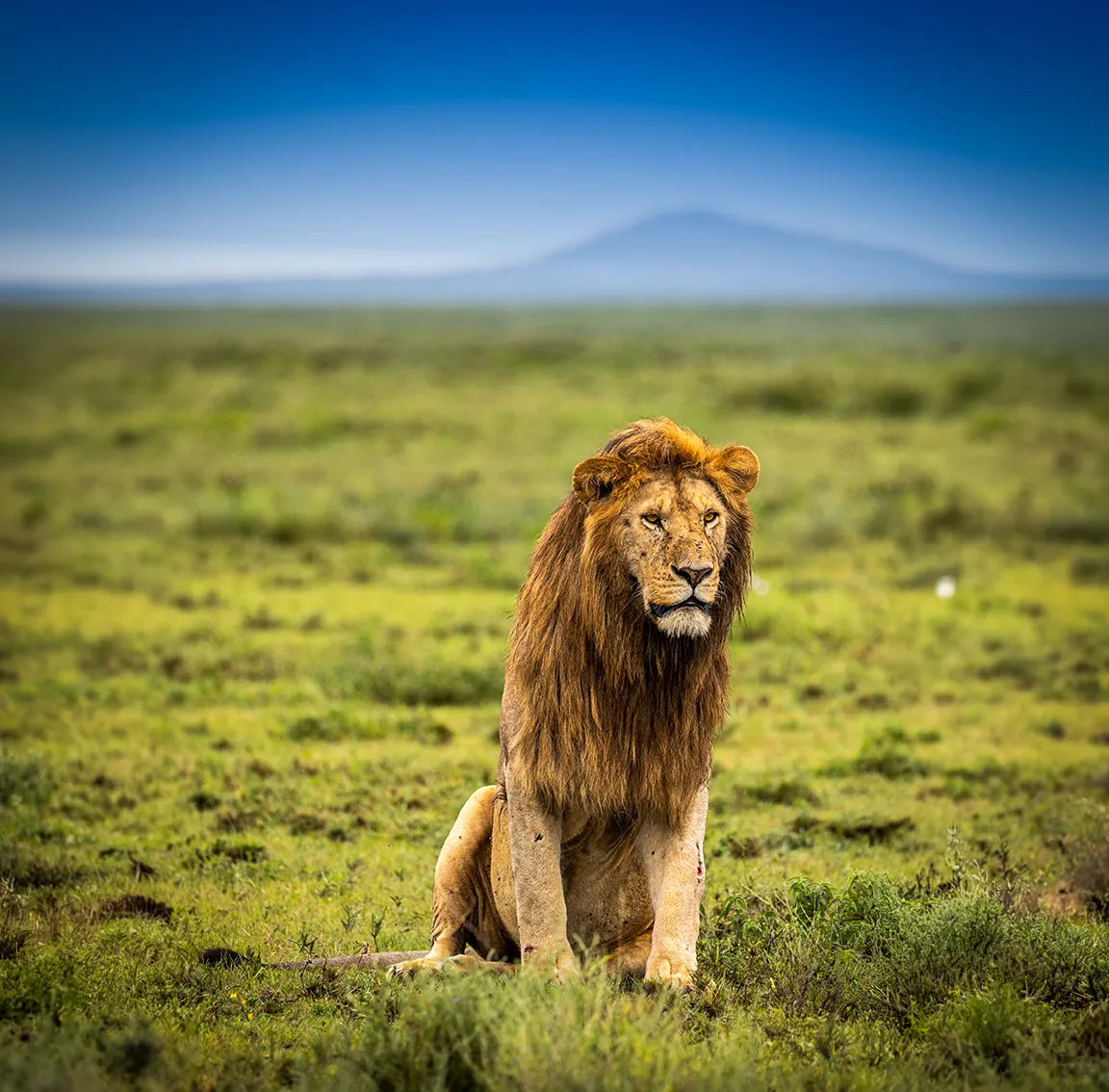
Best to see lions as well as other predators
Excellent range of safari accommodations
The Glory of Tanzania
Best Time to Visit Serengeti National Park
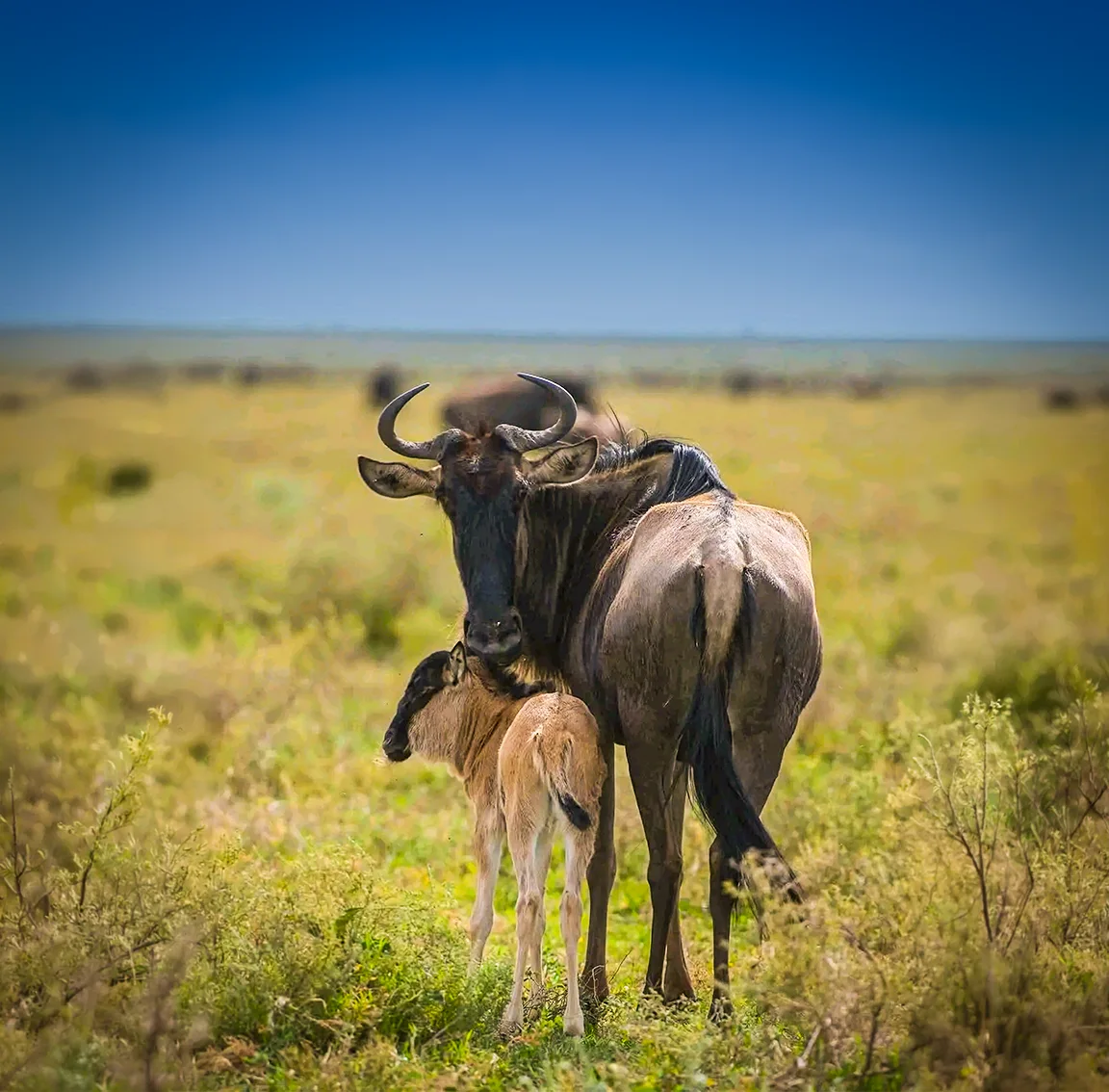
The Best Time to Visit Tanzania for a Serengeti safari depends on what you want to experience. While wildlife viewing is excellent year-round, the Great Migration is the park’s biggest highlight. From January to October, millions of wildebeest move across the plains, attracting predators. However, their movement follows rainfall patterns, making exact timings unpredictable.
For the wildebeest calving season, visit Ndutu from January to February, when thousands of calves are born, drawing predators. June to July is perfect for spotting herds in the Western Corridor, while August to September offers thrilling Mara River crossings in the north. If you prefer a less crowded safari, explore other parts of the Serengeti, where abundant wildlife can be seen year-round.
Accommodations At the Serengeti
The following are some of our recommendations for accommodations in Serengeti National Park:
Budget
Mid-Range
Luxury
Embalakai Camp
Serena
Lemala
Tanzania Bush Camp
Acacia Camps
Nimali
An'gata Camps
Karibu Camps
Asilia
Moivaro
Sopa
&Beyond
Tanzania Wild Camps
TWC
One Nature
Bougainvillea Group
Wayo Africa
Four Seasons
Tortilis
—
Melia
—
—
Wellworth
—
—
Elewana
Most travelers prefer the luxury of the Four Seasons Safari Lodge in Serengeti. The lodge provides game drives and hot-air balloon safaris. Prices start from $1000.
Serengeti Safari Cost (Starts From $70 To $650)
Entry to Serengeti National Park starts from $70 per person, per day (plus 18% VAT). Full safari packages, which include park fees, accommodation, transport, and a guide, are priced as follows:
2-Day Serengeti Safari costs from $750 per person with budget accommodations or $1,350 per person with luxury accommodations.
3-Day Serengeti Safari — from $1,250 per person with budget lodges and campsites, or from $1,650 per person for luxury lodges and tented camps.
Tarangire National Park – The Elephant Kingdom
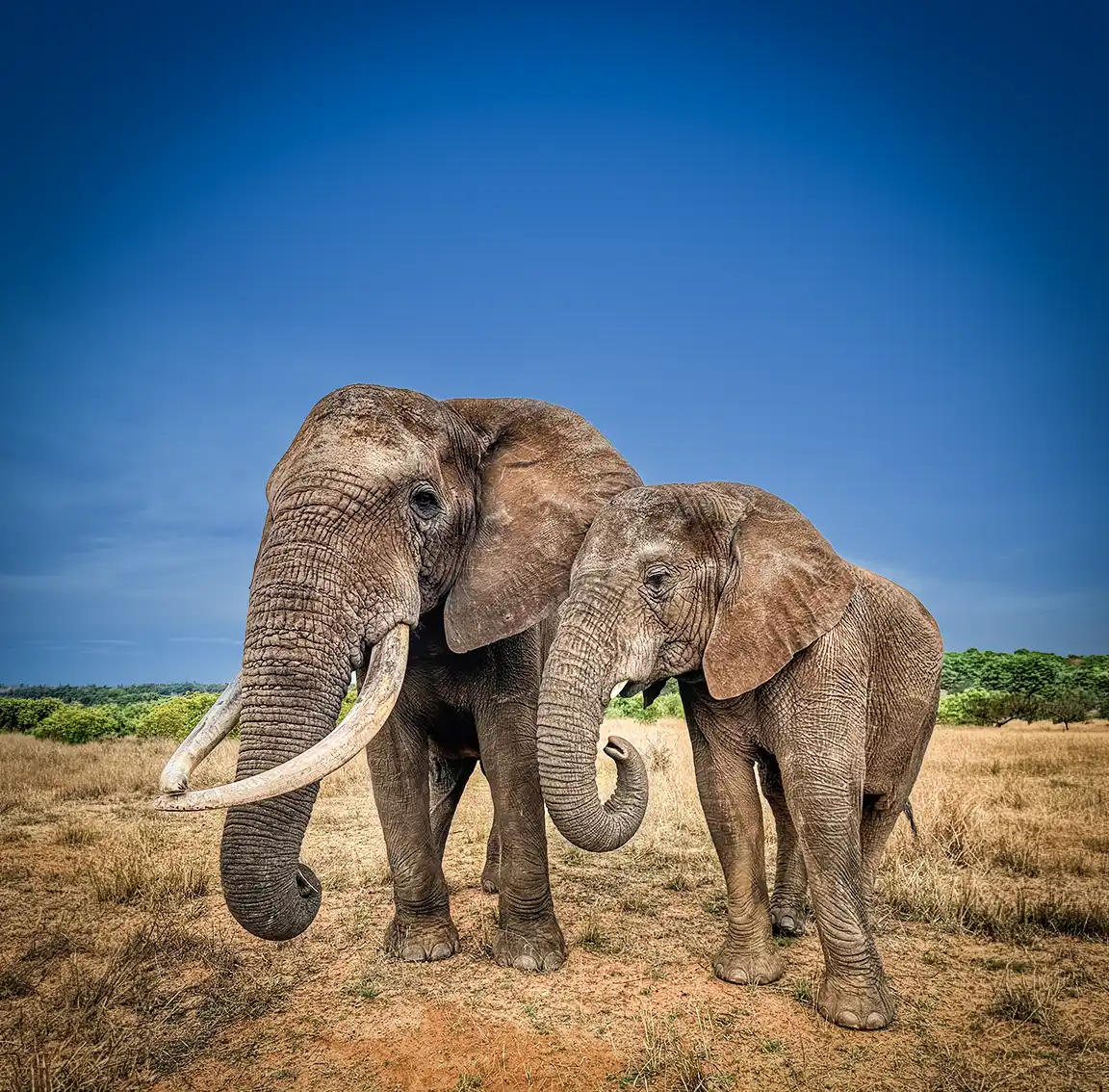
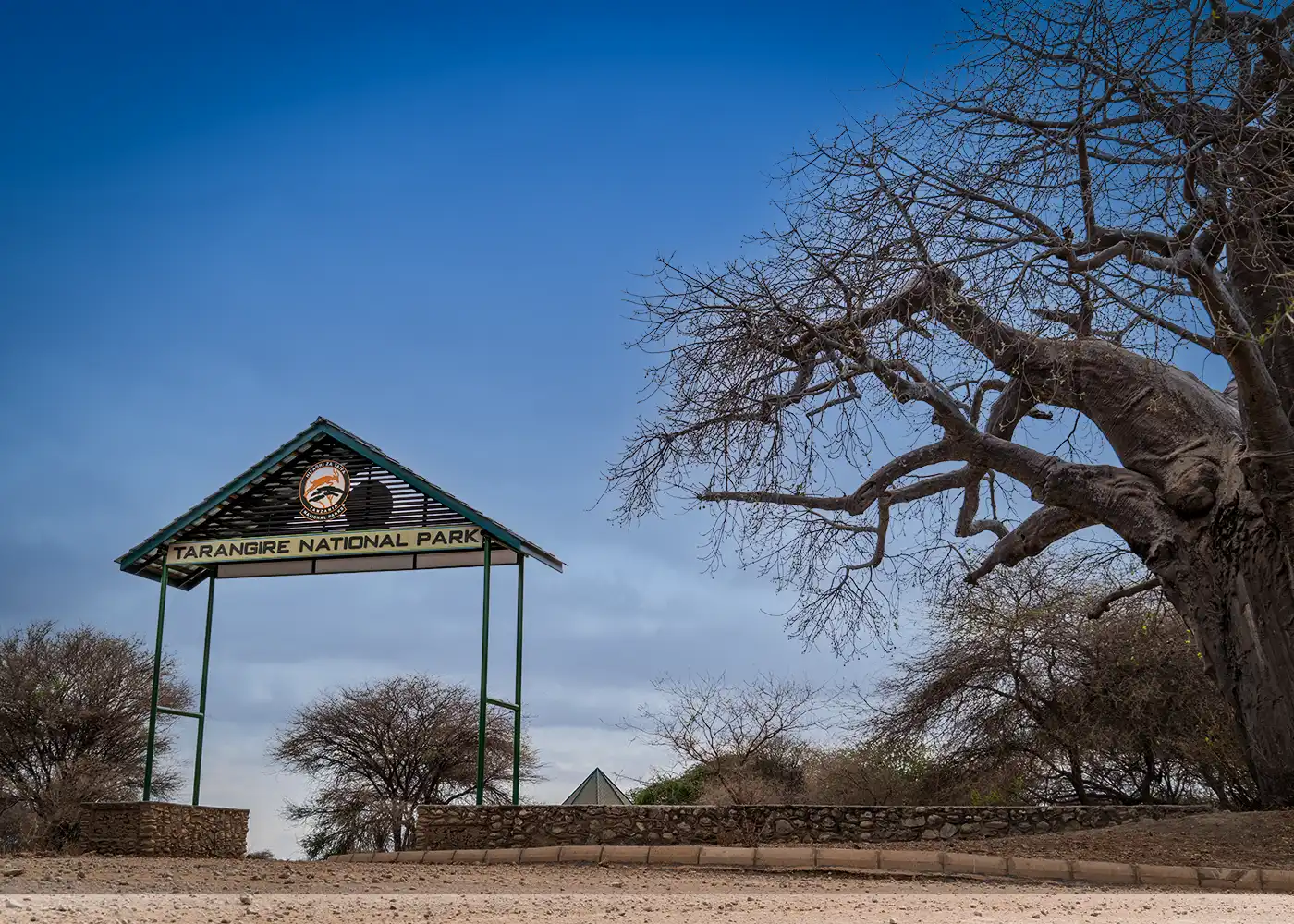
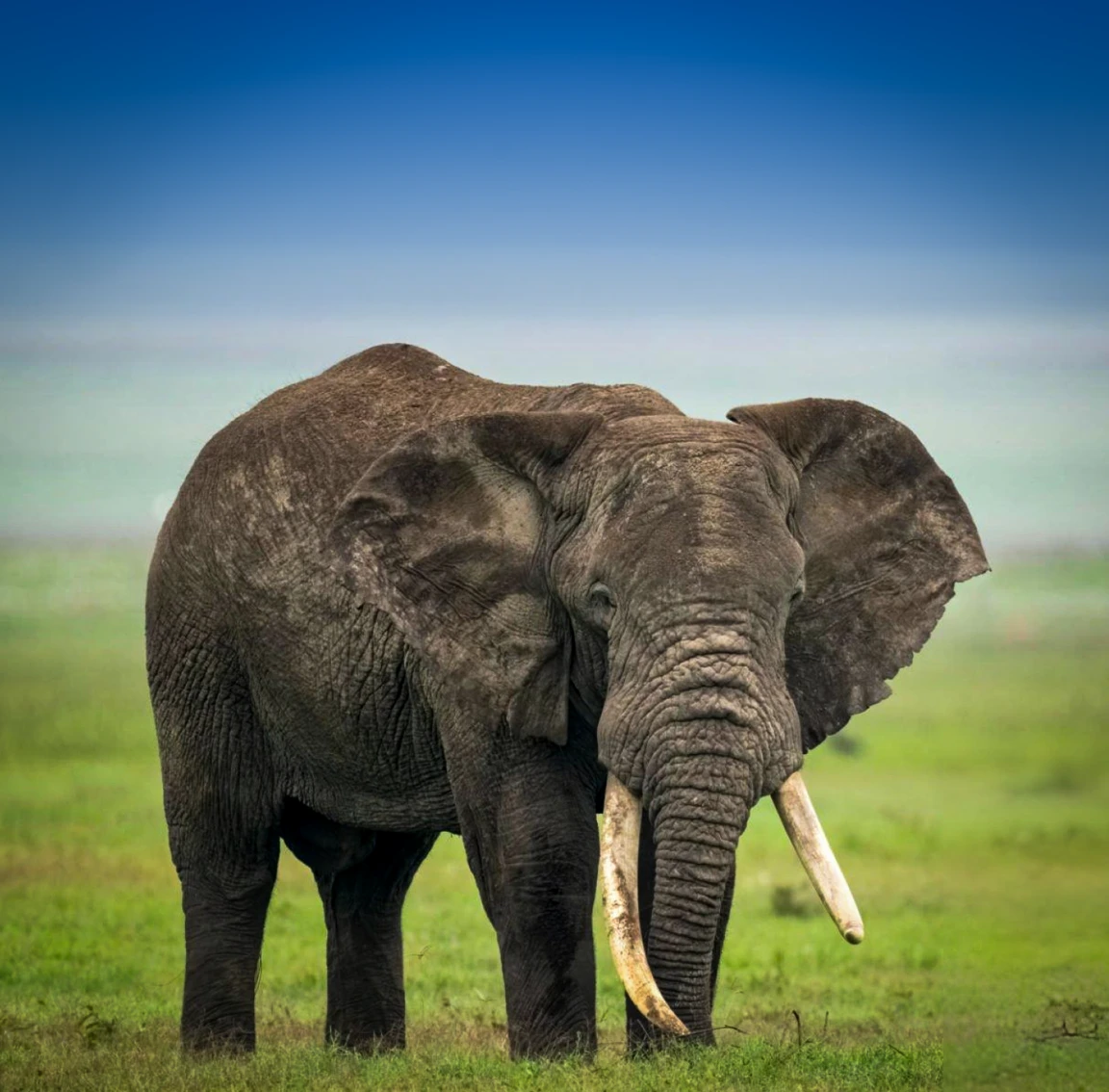
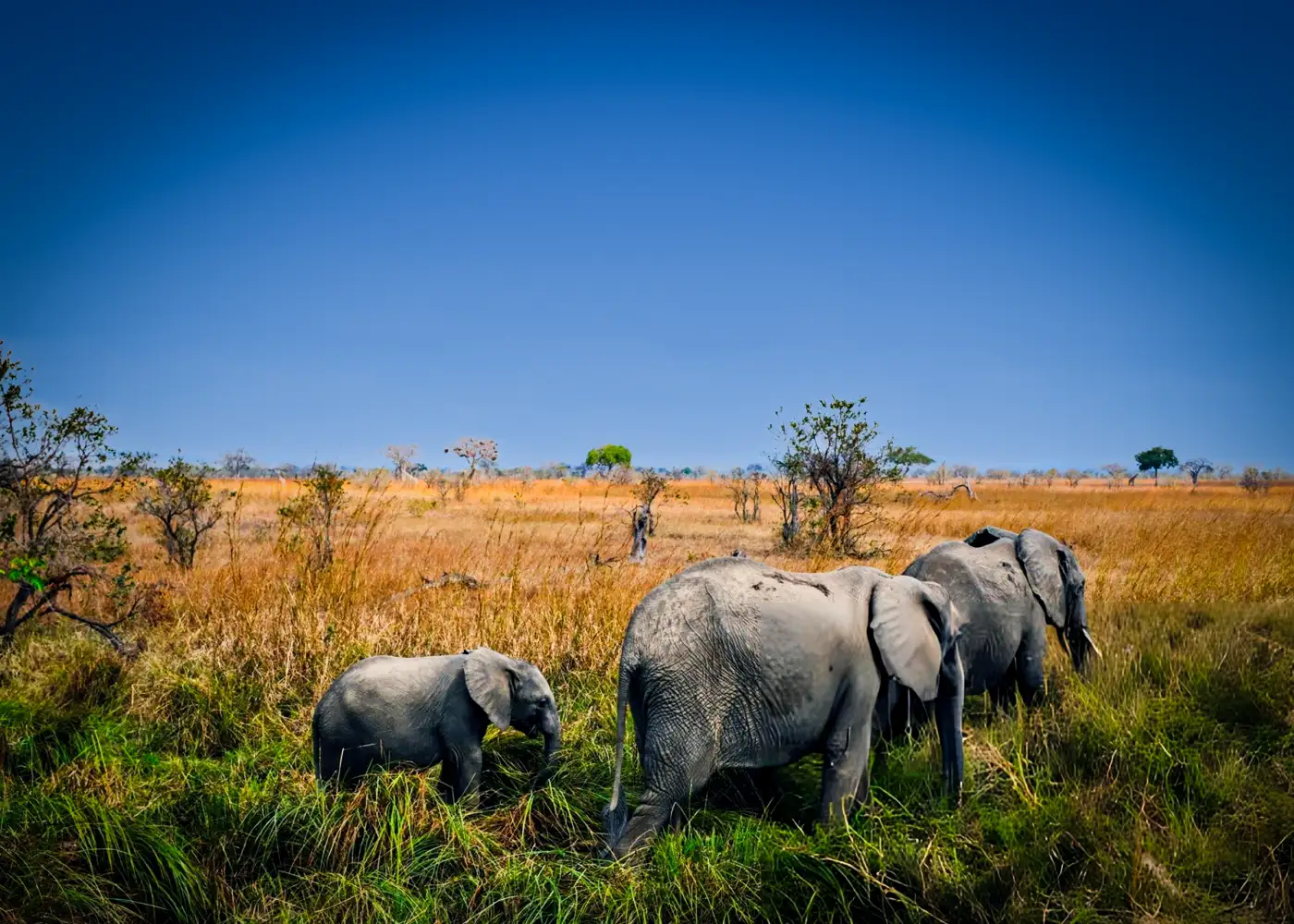
Tarangire National Park, part of the Northern Tanzania Safari Circuit, is a hidden gem known for its vast landscapes and rich wildlife. The Tarangire River, the park’s lifeline, attracts large herds of elephants and other animals, especially in the dry season, when water sources elsewhere disappear, creating one of Tanzania’s most spectacular wildlife gatherings.
Area
2,850 sq. km. (1,100 sq. miles)
Established in
1970
Coordinates
4.0057° S, 35.9788° E
Opening Hours
6 am to 6 pm (open every day)
Famous For
Large elephant herds & Iconic Baobab Trees
Activities
Guided Walking Safaris, Day Game Drives, Birdwatching
Areas of the Tarangire National Park are covered with mixed woodlands and acacia shrubs. Most remarkable are the towering baobab trees. The southern and eastern regions of the park have a big network of marshlands.
Highlights of Tarangire
Guided walking safaris and night game drives
Variety of accommodation options
Concentrated wildlife viewing chances during the dry season
Stunning landscapes dotted with ancient baobabs and towering acacias
The Elephant Kingdom
Best Time to Visit Tarangire National Park
The best time to visit Tarangire National Park is from July to November, during the Dry Season. This period offers incredible wildlife viewing as animals gather around the Tarangire River, the park’s main water source.
During the Wet Season (November to May), many animals migrate out of the park, making wildlife spotting less frequent. However, the lush greenery and vibrant birdlife during this time can appeal to nature enthusiasts seeking a quieter experience. Plan your visit during the Dry Season to enjoy Tarangire’s wildlife at its peak!
Accommodations In Tarangire National Park
The following are the top accommodations around Tarangire National Park that offer top-notch facilities:
Budget
Mid-Range
Luxury
Tanzania Bush Camp
Serena
Lemala
An'gata Camps
Acacia Camps
Nimali
Bougainvillea Group
Sopa
Honeyguide
—
Tarangire Safari Lodge
Wellworth
—
TWC
Elewana
—
—
Sanctuary
Acacia Tarangire Luxury Camp is also popular among travelers. It provides an exclusive and private experience. The price of Acacia Camp starts from $260 onwards.
Tarangire Safari Cost (Starts From $50 To $600)
The entrance fee for Tarangire National Park during the high season is $50. And $45 in the low season (per person). So, including vehicle costs, the average cost of a Tarangire Safari will be:
1-Day Tarangire National Park Safari – From $200 (per person)
2-Day Tarangire National Park Safari – From $400 (per person)
3-Day Tarangire National Park Safari – From $600 (per person)
Ngorongoro Conservation Area – A Biodiversity Conservation Capital!
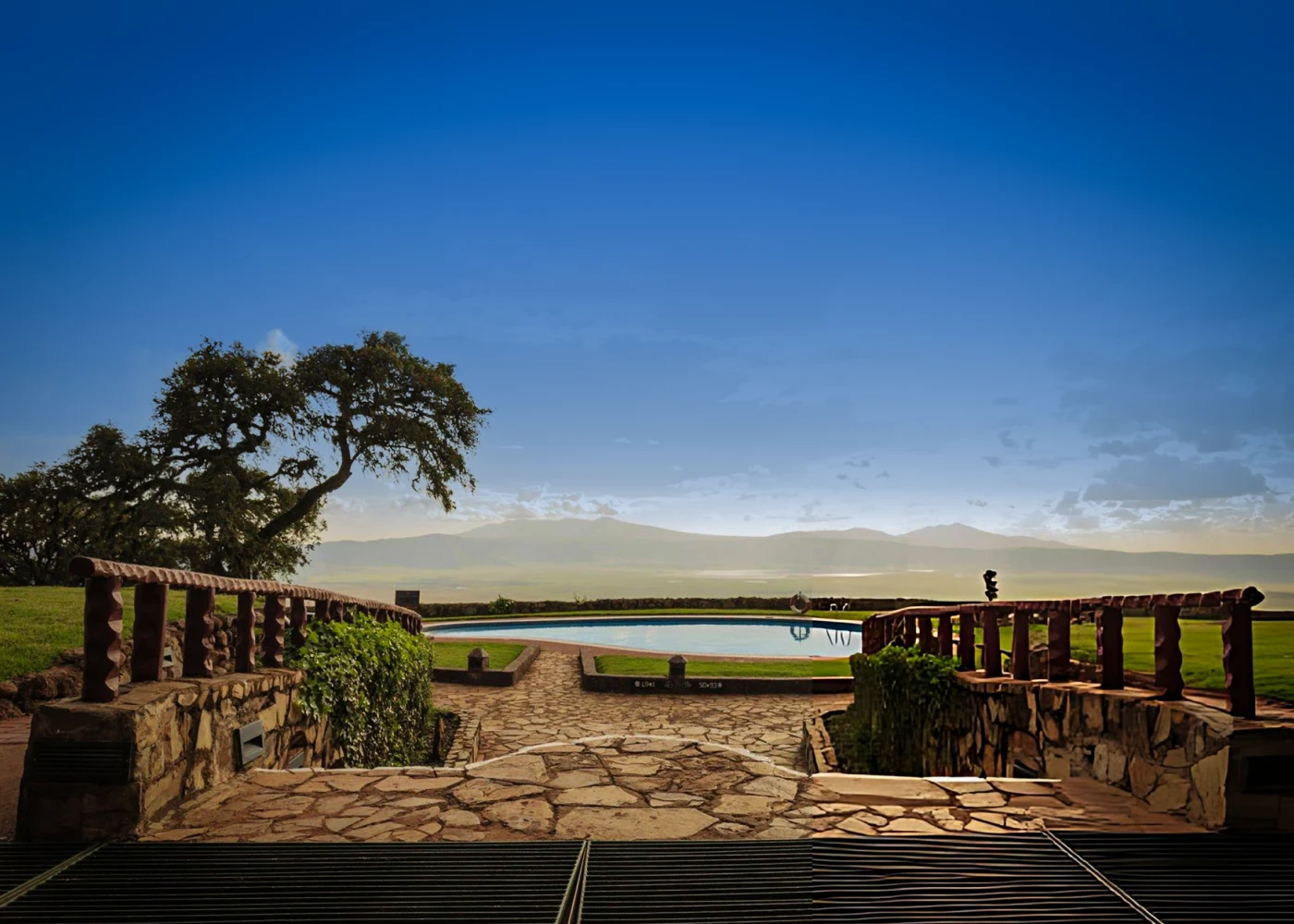
The Ngorongoro Conservation Area is a breathtaking destination in Tanzania’s northern highlands and part of the Serengeti ecosystem. It features vast grasslands, acacia woodlands, and rolling crater highlands. At its heart lies the Ngorongoro Crater, the world's largest intact caldera, teeming with wildlife. The Maasai people also call this region home, coexisting with nature uniquely and harmoniously.
Area
8,292 sq. km. (3,202 square miles)
Established in
1959
Designated as a UNESCO World Heritage site in
1979
Coordinates
3.2279° S, 35.5075° E
Opening Hours
6 am to 6 pm (open every day)
Activities
Guided Walking Safaris, Day Game Drives, Birdwatching
Set against the backdrop of an ancient volcanic caldera, the Ngorongoro Conservation Area is a great place to witness a spectacular Big Five Safari. With diverse habitats, it provides incredible wildlife encounters on a Ngorongoro Safari. The breathtaking scenery and thriving predator population make it a must-visit, where spotting the Big Five in just one day is entirely possible.
Highlights of Ngorongoro
Year-round wildlife viewing
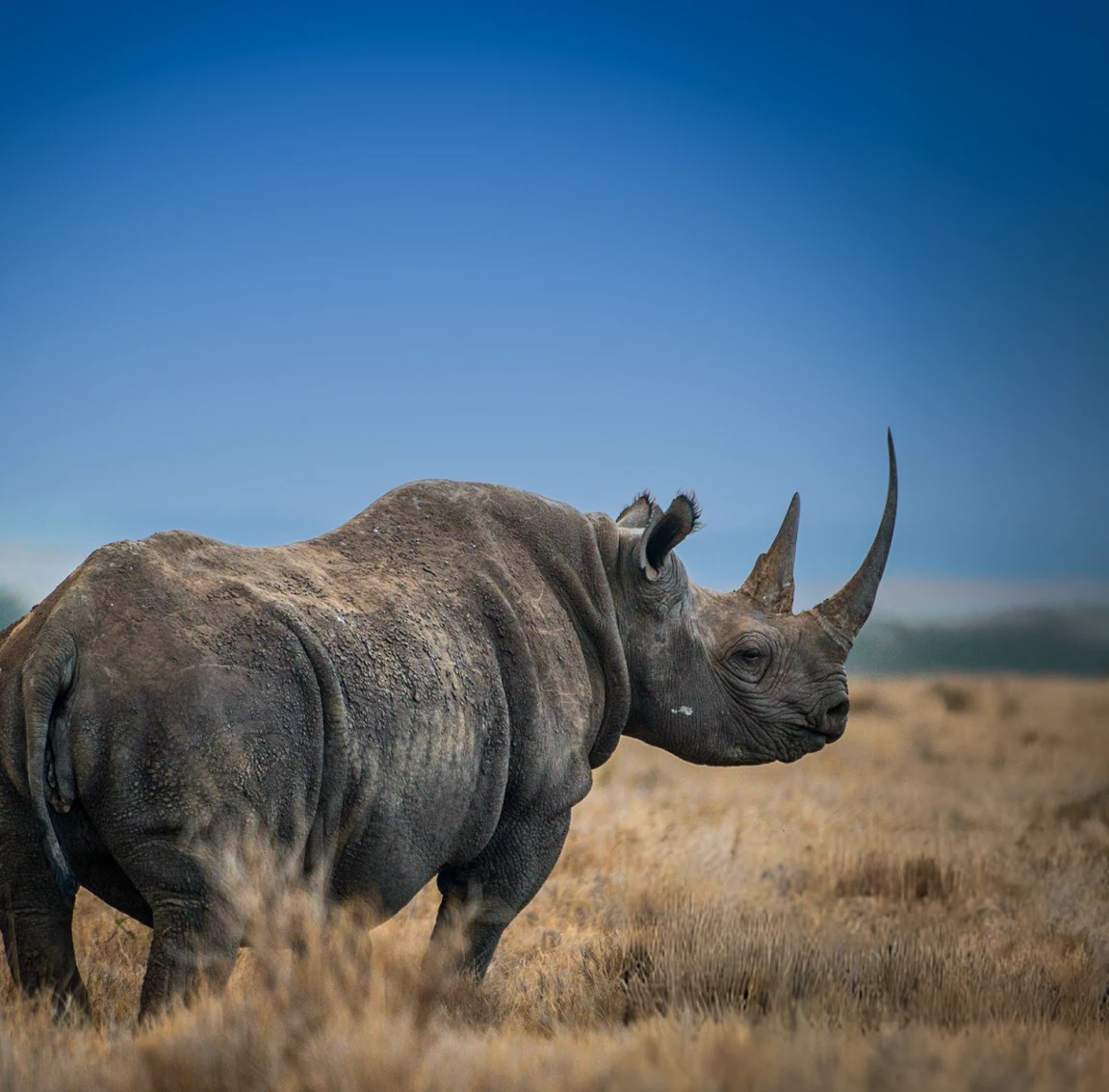
Best places to see the black rhinoceros
Cultural tours to nearby Maasai villages
Reliable Big Five sightings
Comfortable & luxurious accommodations
A Biodiversity Conservation Capital!
Best Time to Visit Ngorongoro Conservation Area
The Ngorongoro Conservation Area offers incredible wildlife viewing all year round. However, the Best Time to Visit Tanzania for a safari here depends on your preferences. From June to October (Dry Season), shorter grass makes spotting wildlife easier. The Wet Season (November to May) brings lush, green landscapes, creating a stunning backdrop for game drives.
An Insight – For a top-notch safari experience, you should consider combining your trip to Ngorongoro with a Serengeti Safari.
Accommodations in the Ngorongoro Conservation Area
Below are a few recommendations for accommodations in the Ngorongoro Conservation Area:
Budget
Mid-Range
Luxury
Tanzania Bush Camp
Serena
Lemala
An'gata Camps
Acacia Camps, Hotels & Lodges
Asilia
Tanzania Wild Camps
Karibu Camps
&Beyond
Tortillis
Sopa
Sanctuary
TWC
Elewana
Ngorongoro Safari Cost (From $70 to $600)
The entrance fee for Ngorongoro Conservation Area in the high season is $70. And, $60 in the low season. For example, the average prices for Ngorongoro Crater (including vehicle costs) are:
1-Day Ngorongoro Safari – From $280 (per person)
2-Day Ngorongoro Safari – From $395 (per person)
3-Day Ngorongoro Safari – From $600 (per person)
Lake Manyara National Park - Wildlife Wonders by the Lake
Lake Manyara National Park is a scenic gem in northern Tanzania, nestled between the Great Rift Valley and Lake Manyara. Spanning the Manyara and Arusha regions, it’s a perfect stop on the Northern Safari Circuit. Its proximity to Ngorongoro and Tarangire makes it an excellent addition to any Tanzania safari, offering diverse wildlife and breathtaking landscapes.
Area
648.7 sq. km
Established in
1960
Location
Northern Tanzania, between Tarangire and Ngorongoro
Coordinates
3.4459° S, 35.8093° E
Opening Hours
6 am to 6 pm (open every day)
Main Attraction
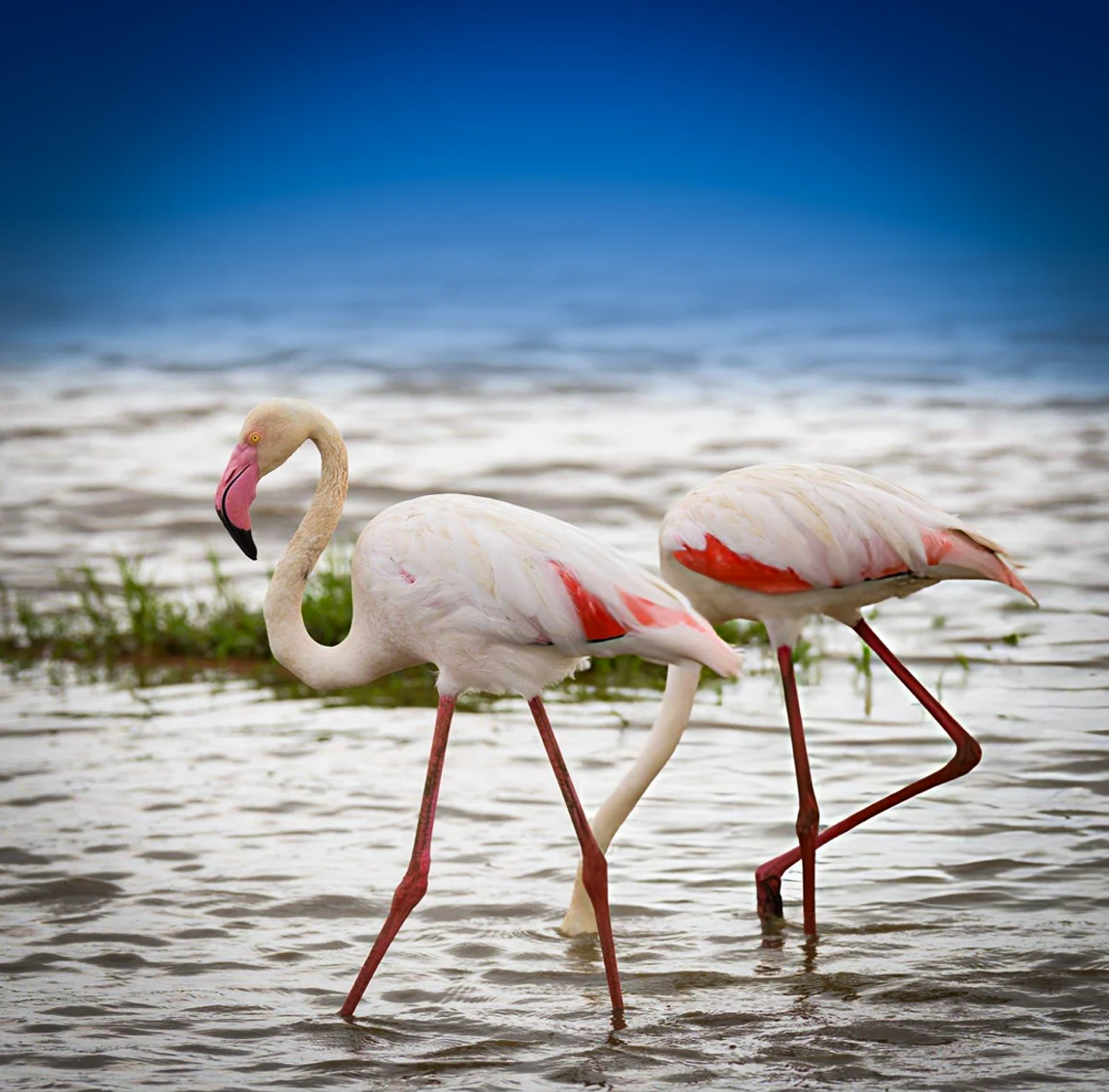
Tree-climbing lions and Lake Manyara’s flamingos
Even though the park is fairly small, it still offers a wonderful safari experience in Tanzania. It also has many distinct ecosystems (like dense forests and open savannah grasslands) and is one of the largest concentrations of mammals in Africa.
Highlights of Lake Manyara
Great destination for walking & night safaris
Fantastic birdwatching possibilities
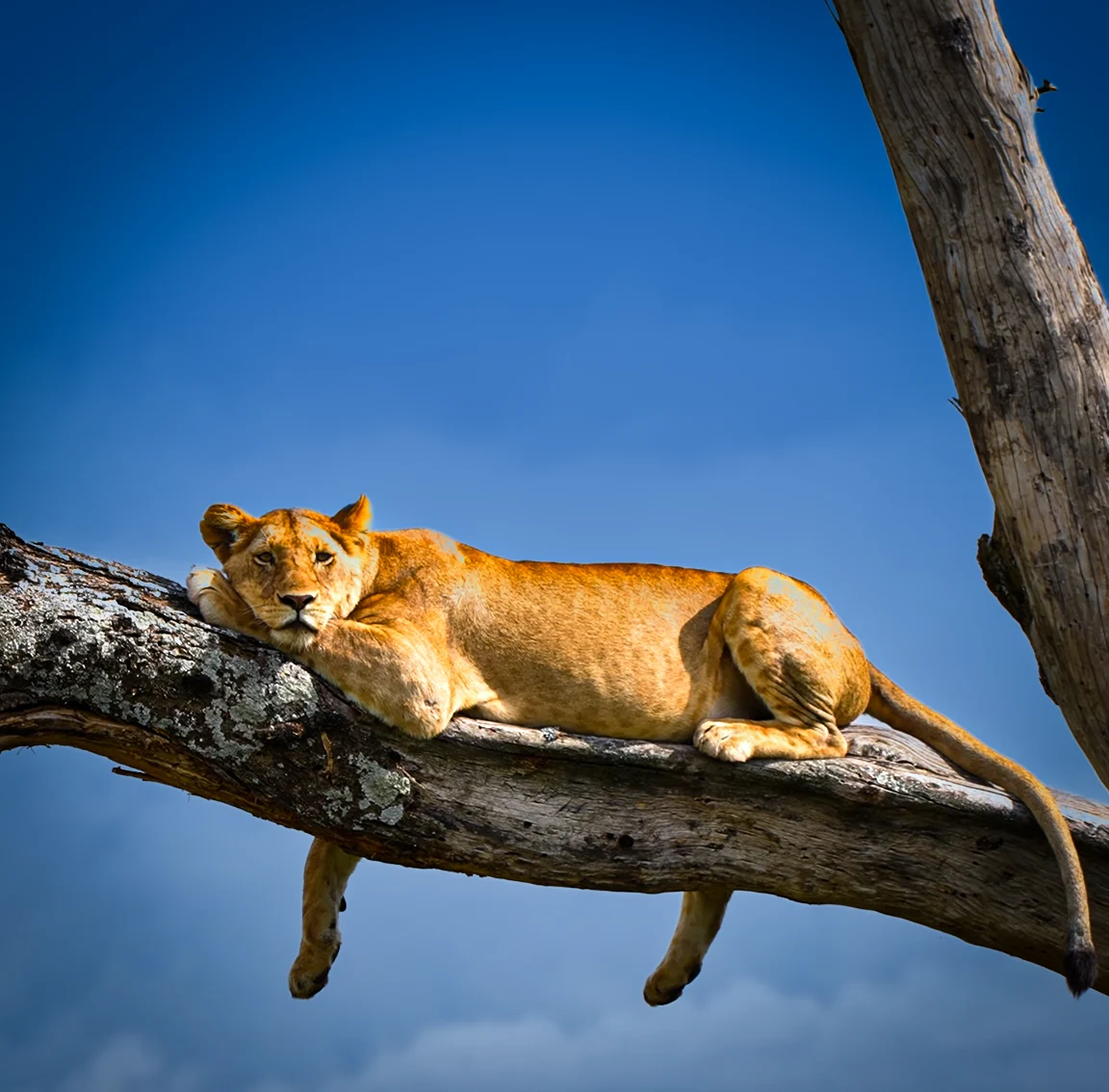
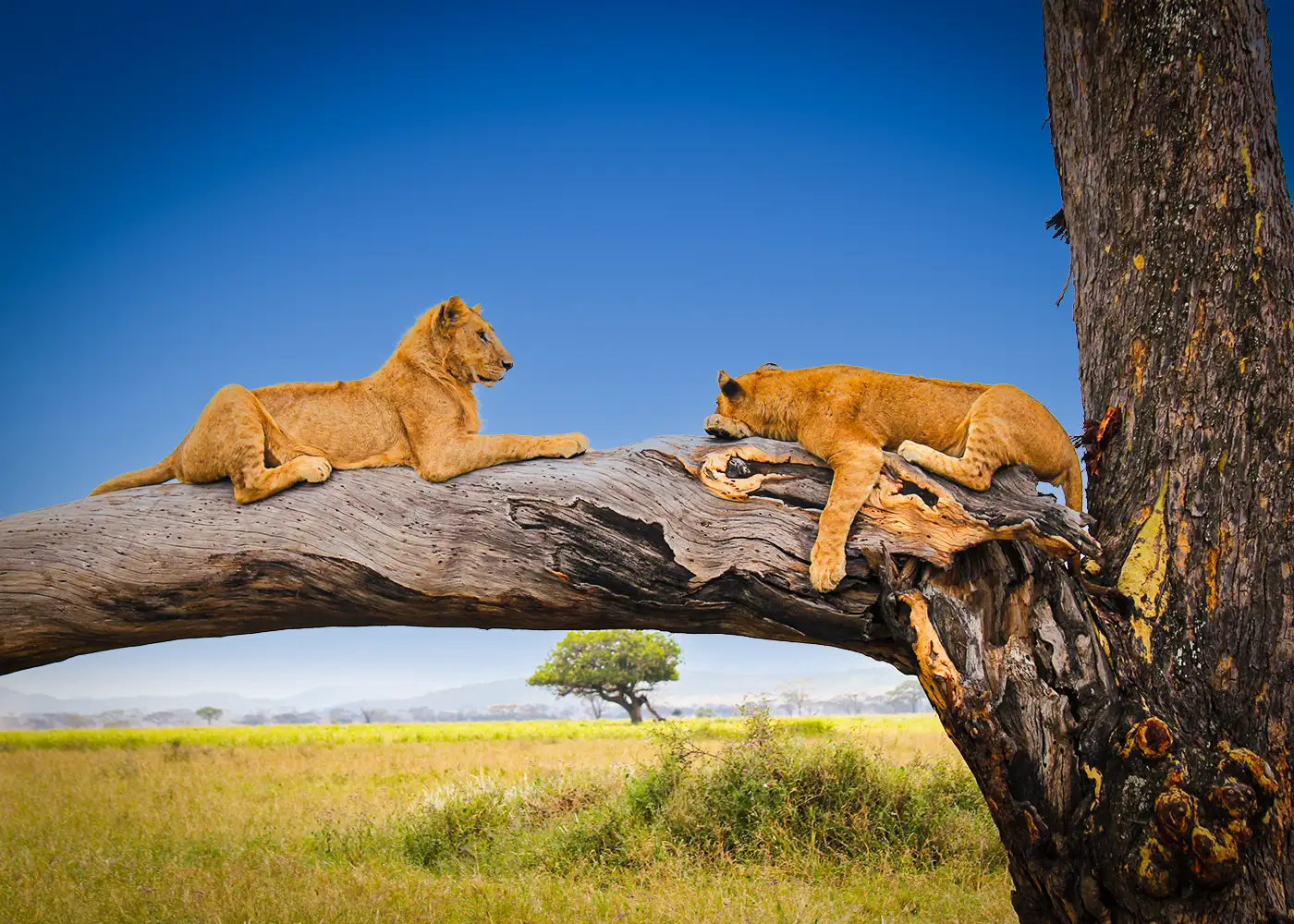
Witness tree-climbing lions atop acacia trees
Unbelievably vast stretches of scenic surroundings
Wildlife Wonders by the Lake
Best Time to Visit Lake Manyara National Park
Lake Manyara National Park offers great wildlife viewing year-round, but the Best Time to visit Tanzania for safaris here is from June to October during the Dry Season. Animals gather around water sources, making them easier to spot. The Wet Season (November to May) transforms the park into a lush paradise with cascading waterfalls and vibrant landscapes. However, March and April experience heavy rains, which may affect accessibility.
Our Opinions – Pack a few warm clothing items if you visit during the dry season. It gets cold in the early mornings. March to May marks the peak of the wet season, so pack weather-sealed lenses and a raincoat/poncho. You should enjoy your safari to the fullest regardless of the weather. For more details, refer to our Safari Packing List Tanzania.
Accommodations In Lake Manyara National Park
The following are some accommodations that we recommend for your safari in Lake Manyara National Park:
Budget
Mid-Range
Luxury
Tanzania Wild Camps
Serena
&Beyond
Bougainvillea Group
Hotels & Lodges
Wellworth
Tortillis
TWC
Escarpment
—
Manyara Secret
Mawe Mawe
—
Wayo Africa
Elewana
Lake Manyara Safari Cost (Starts From $50 To $620)
The entrance fee for Lake Manyara National Park is $50 (in the high season). And $45 (in the low season). Thus, by including vehicle costs, the average Lake Manyara Safari Cost will be:
1-Day Lake Manyara National Park Safari – From $200 (per person)
2-Day Lake Manyara National Park Safari – From $450 (per person)
3-Day Lake Manyara National Park Safari – From $620 (per person)
Arusha National Park – The Geneva of Africa!
Arusha National Park, located in northern Tanzania near the town of Arusha, may be small, but it holds incredible Tanzania wildlife diversity. The park’s landscapes range from the towering Mount Meru to the scenic Ngurdoto Crater and the lush montane forests. This hidden gem is perfect for those seeking a mix of adventure, wildlife, and breathtaking scenery.
Area
552 sq. km.
Established in
1960
Location
Northern Tanzania, just 35 km (22 miles) from Arusha town
Coordinates
3.2500° S, 36.7500° E
Opening Hours
6 am to 6 pm
Main Attraction
Mount Meru, the second-highest mountain in Tanzania
While Arusha National Park may not have the vast wildlife populations of other National Parks in Tanzania, it offers something unique. Its breathtaking landscapes, thrilling hiking trails on Mount Meru, and diverse outdoor activities make it an incredible destination for nature lovers and adventure seekers alike.
Highlights of Arusha
Guided Nature Walks
Canoeing Safaris
Day trips to the Momella Lakes
Cultural excursions to the bomas of the Maasai communities
Nature Walks in Lake Duluti
The Geneva of Africa!
Best Time to Visit Arusha National Park
The best time to visit Arusha National Park is during the dry seasons from June to September and December to March. These months offer the best conditions for wildlife spotting, hiking, and outdoor activities. If you're planning a Tanzania safari, this period also aligns with The Great Migration in the Serengeti, making it a perfect addition to your itinerary.
Arusha National Park Safari Cost (Starts From $50 To $230)
Arusha National Park has an entrance fee of $50 (during the high season). And $45 (during the low season). Below is the day-wise average safari cost in Arusha National Park:
1-Day Arusha Safari - $185 (per person)
4-Day Horse-riding Safari in Arusha – $4000 (per person)
1-Day Cycling Tour to Arusha National Park – From $230 onwards (per person)
How Do Northern National Parks Compare?
Discover the wonders of Northern Tanzania’s National Parks and experience the thrill of a lifetime. Witness the Great Migration in Serengeti, explore the world's largest intact volcanic caldera in Ngorongoro, and marvel at the stunning landscapes of Tarangire, Lake Manyara, and Arusha. With so much to offer, Northern Tanzania's national parks are a must-see destination for any nature lover. Let’s find out the comparisons….
National Park
Location
Size (sq. km.)
Established
Activities
Accessibility
Serengeti
Northern Tanzania
14,763
1951
Game drives, hot air balloon rides, cultural tours,
walking safaris, and more
Accessible year-round, with peak season from June to October
Ngorongoro
Northern Tanzania
8,292
1959
Game drives, cultural tours, and hiking
Accessible year-round, with peak season from June to October
Tarangire
Northern Tanzania
2,850
1970
Game drives, walking safaris, and birdwatching
Accessible year-round, with peak season from June to October
Lake Manyara
Northern Tanzania
325
1960
Game drives, birdwatching, and cultural tours
Accessible year-round, with peak season from June to October
Arusha
Northern Tanzania
552
1960
Hike Mount Meru, canoe rides, and nature walks
Accessible year-round, with peak season from June to October
Note: Accommodation options vary in terms of luxury and price range, and not all options are available in every park.
What Other Popular National Parks Can You Visit in Tanzania?
Besides the Northern Circuit, safari tours with African Scenic Safaris take you to breathtaking landscapes across other regions. Spot chimpanzees in Mahale, cruise along Nyerere’s waterways, or hike Udzungwa’s lush trails. Each park offers unique wildlife, stunning scenery, and incredible adventures, making Tanzania a diverse safari destination beyond the usual routes.
Mahale Mountains National Park
Present on the forested slopes of the Mahale Mountains, Mahale Mountains National Park is a paradise for wildlife lovers, especially those eager to see chimpanzees in their natural habitat. Located along the shores of Lake Tanganyika, this park offers breathtaking scenery, diverse wildlife, and a peaceful escape into nature on our Western Tanzania Safaris.
Home to one of Africa’s largest chimpanzee populations.
Stunning landscapes with rainforest, savannah, and mountain ranges.
Spectacular sunsets over Lake Tanganyika, ideal for photography.
Apart from chimpanzees, the Mahale hosts a variety of other primates, rare fish species, and birdlife. The pristine environment, accessible only by boat or small aircraft, makes it a secluded gem for those looking to explore Tanzania's untouched wilderness.
Gombe Stream National Park
Spanning just 14 square miles on the eastern shore of Lake Tanganyika, Gombe Stream National Park is Tanzania’s smallest national park. Yet, it holds significant historical and scientific value, being the site where Jane Goodall conducted groundbreaking chimpanzee research.
Offers one of Tanzania’s best chimpanzee trekking experiences.
Rich biodiversity, including red colobus monkeys and olive baboons.
Forested hills, valleys, and stunning lake views.
A paradise for bird watchers with over 200 recorded species.
Gombe’s dense forest and rolling hills provide an intimate wildlife experience on our Western Tanzania Safaris. Trek through the forest, follow chimpanzee families and immerse yourself in the beauty of this unique park.
Most travellers combine two or three northern parks rather than choosing one. We have run these routes since 2009 and know which pairings work in your travel month. Tell us yours.
At 30,893 square kilometres, Nyerere National Park is Africa’s largest national park. This vast wilderness was carved out of the legendary Selous Game Reserve and is home to an impressive array of wildlife.
Largest protected wildlife area in Africa by area.
Boat safaris along the Rufiji River for unique wildlife sightings.
Home to elephants, lions, wild dogs, and hippos.
One of the best parks for predator sightings in Tanzania.
With fewer crowds than Tanzania’s northern parks, Nyerere offers an authentic, off-the-beaten-path safari experience, featuring game drives, boat safaris, and walking safaris through its untouched landscapes.
Udzungwa Mountains National Park
Part of the Eastern Arc Mountains, Udzungwa Mountains National Park is a biodiversity hotspot known for its dense rainforests, rare wildlife, and spectacular waterfalls.
A paradise for hikers and nature lovers.
Home to unique species like the Udzungwa red colobus and the Sanje mangabey.
Features the stunning 170-meter-high Sanje Waterfalls.
Offers excellent birdwatching with many endemic species.
With no roads inside the park, Udzungwa is a hiking-only destination, making it ideal for those who love adventure, nature, and unspoiled wilderness.
Ruaha National Park
The second-largest national park in Tanzania, Ruaha National Park is a remote and rugged landscape known for its vast savannahs and large predator populations.
Home to Tanzania’s largest elephant population.
Features lions, cheetahs, leopards, and endangered wild dogs.
Offers exclusive safaris with fewer crowds.
Stunning landscapes with rolling hills and iconic baobab trees.
Ruaha is perfect for photography, birdwatching, and walking safaris, making it a hidden gem for those looking for a secluded yet rewarding Tanzania Safari Experience.
Mikumi National Park
As Tanzania’s fourth-largest national park, Mikumi National Park is an easily accessible safari destination near Dar es Salaam. Known for its open grasslands and abundant wildlife, it’s an excellent choice for travelers short on time.
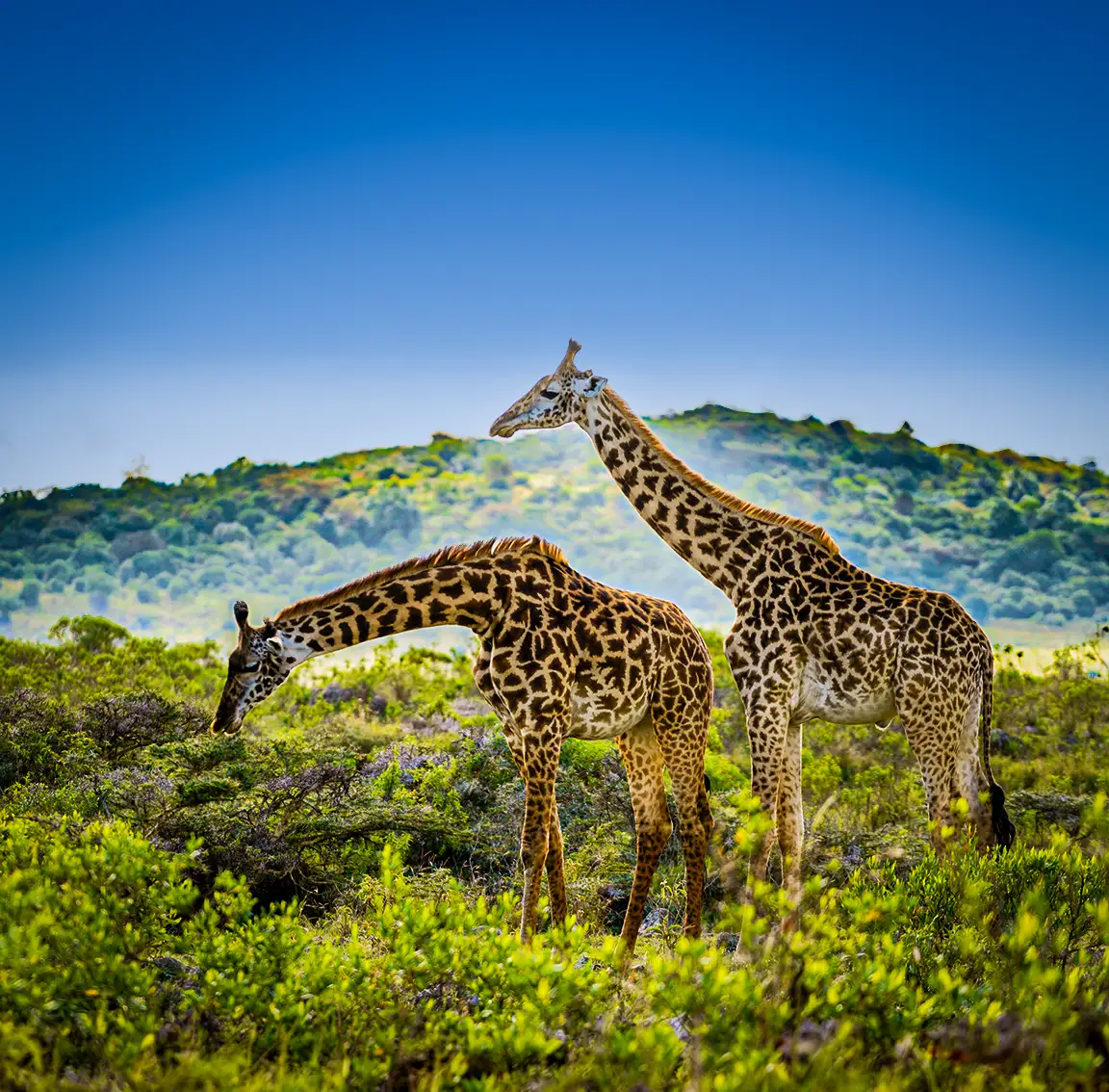
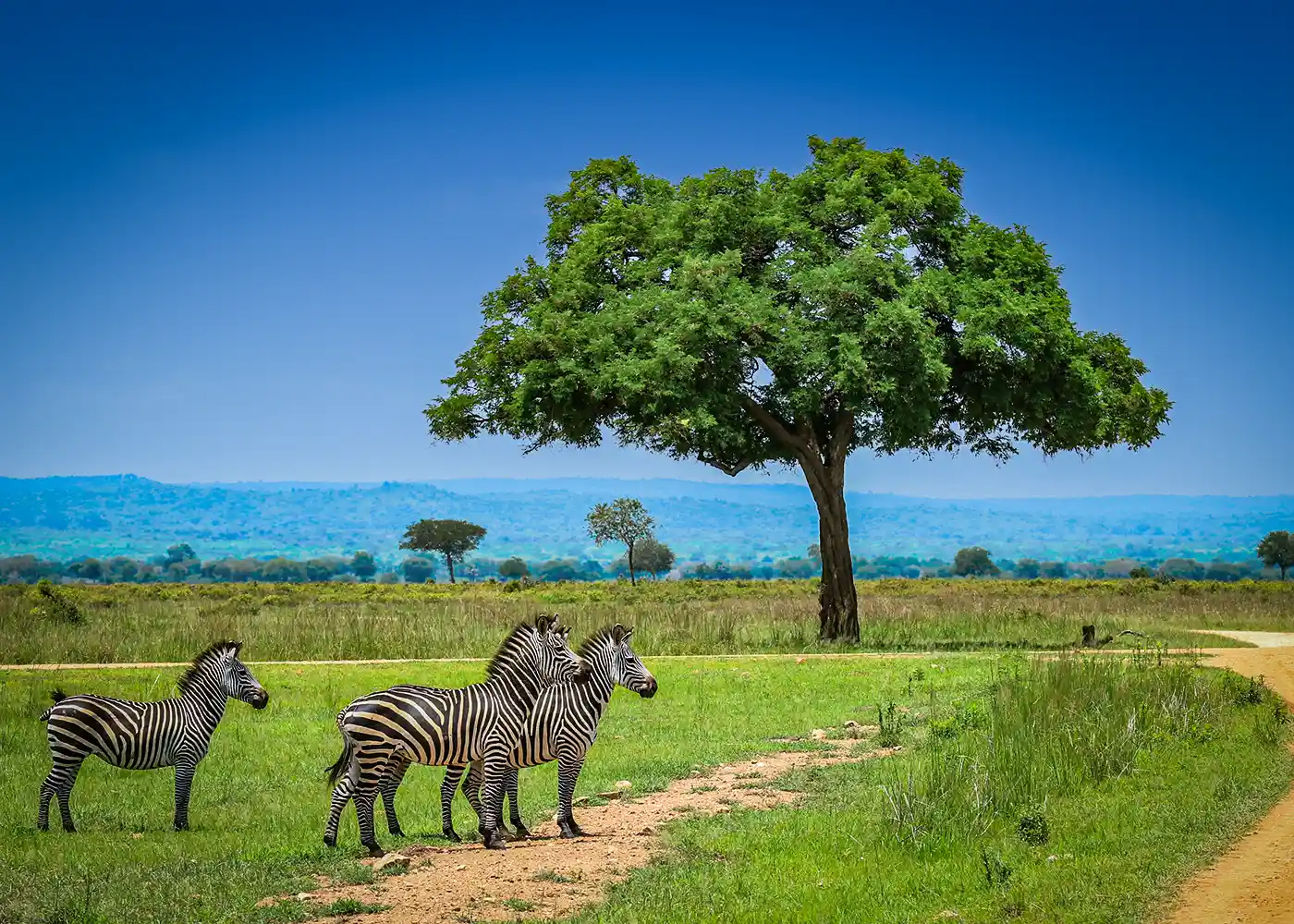
Home to elephants, lions, zebras, giraffes, and hippos.
Great for a short yet rewarding Southern Tanzania safari.
Easily accessible from Dar es Salaam, perfect for weekend trips.
Excellent game viewing in its open savannah landscapes.
Mikumi’s proximity to Ruaha and Nyerere National Park also makes it a great addition to safaris, offering a blend of classic game drives and breathtaking scenery.
Which Southern or Western Tanzania Park Should You Visit?
These parks sit far from the northern circuit, and each one offers something quite different. Here's how they compare at a glance.
Southern & Western Circuit
Which Southern or Western Tanzania Park Should You Visit?
These parks sit far from the northern circuit, and each one offers something quite different.
What matters most to you?
Show Me Everything
Chimpanzees
Predators & Big Game
Elephants
Boat Safaris
Hiking on Foot
Solitude & Few Crowds
Conservation History
Rare & Endemic Wildlife
Easy Access from Dar
No park matches that combination — try Show Me Everything.
Mahale and Gombe pair naturally on a western itinerary, while Mikumi, Nyerere, and Ruaha combine well in the south. Below is a closer look at each.
National Parks for Best Safari Activities
The top national parks differ depending on your preferred safari experience. Each park has a distinct terrain, wildlife encounters, and activities tailored to diverse interests. The following is a list of the best national parks in Africa Tanzania, carefully chosen depending on the Tanzania Safari Activities you want to do.
Best Safari Activities
For Game Viewing
Game drives in Tanzanian National Parks are the cornerstone of our Tanzania Safari Tours. So, to offer an all-encompassing safari adventure here are some of the best national parks for game viewing.
Serengeti National Park
The central takeaway of Tanzania’s northern circuit, the Serengeti harbours a massive concentration of wildlife, with everything from herbivores to carnivores. Plus, this is also the site of the legendary Great Wildebeest Migration that comprises supersized herds of wildebeests and zebras.
Ruaha National Park
Justifiably termed as one of East Africa’s best-kept game-viewing secrets, the sheer volume and diversity of wildlife in Ruaha are sure to leave you surprised. This is enhanced far more towards the end of the dry season when elephants seem to wander around every corner.
Tarangire National Park
Tarangire preserves classic stretches of dry savannahs dotted with plenty of baobabs. This Tanzania Park is home to enormous herds of elephants, along with an abundance of other life.
Gombe Stream and Mahale Mountains
If you want a low-key, remote safari experience on Tanzania Safari Tours, then Mahale and Gombe are the front-running destinations. Both of these parks offer groundbreaking face-to-face chimpanzee trekking adventures.
For Birdwatching
Tanzania Parks are also home to an impressive array of birdlife, making it a paradise for birdwatchers. With over 1,000 bird species recorded, Tanzania is a birding hot spot, and exploring the parks with a pair of binoculars and a field guide can reveal a whole new world of feathered wonders.
Lake Manyara National Park
This Tanzanian National Park is the odds-on-favourite among avid twitchers and for good reason! You can expect to tick off hundreds of different bird species in the span of just a single day, including everything from storks and eagles to barbets and pink flamingos.
Mikumi National Park
More than 400 species of birds have been recorded in this Tanzanian National Park, including colourful residents like the yellow-throated longclaw, bateleur eagle, lilac-breasted roller, etc. They are joined by a host of migrant species from November to April.
For Hiking
While game drives are a popular way to explore Tanzania Parks, nothing quite compares to the thrill of hiking through them. With miles of well-maintained trails, hikers can witness the stunning natural beauty while also getting a chance to spot wildlife and learn about the local flora. The following are some recommended parks to visit:
Mount Kilimanjaro National Park
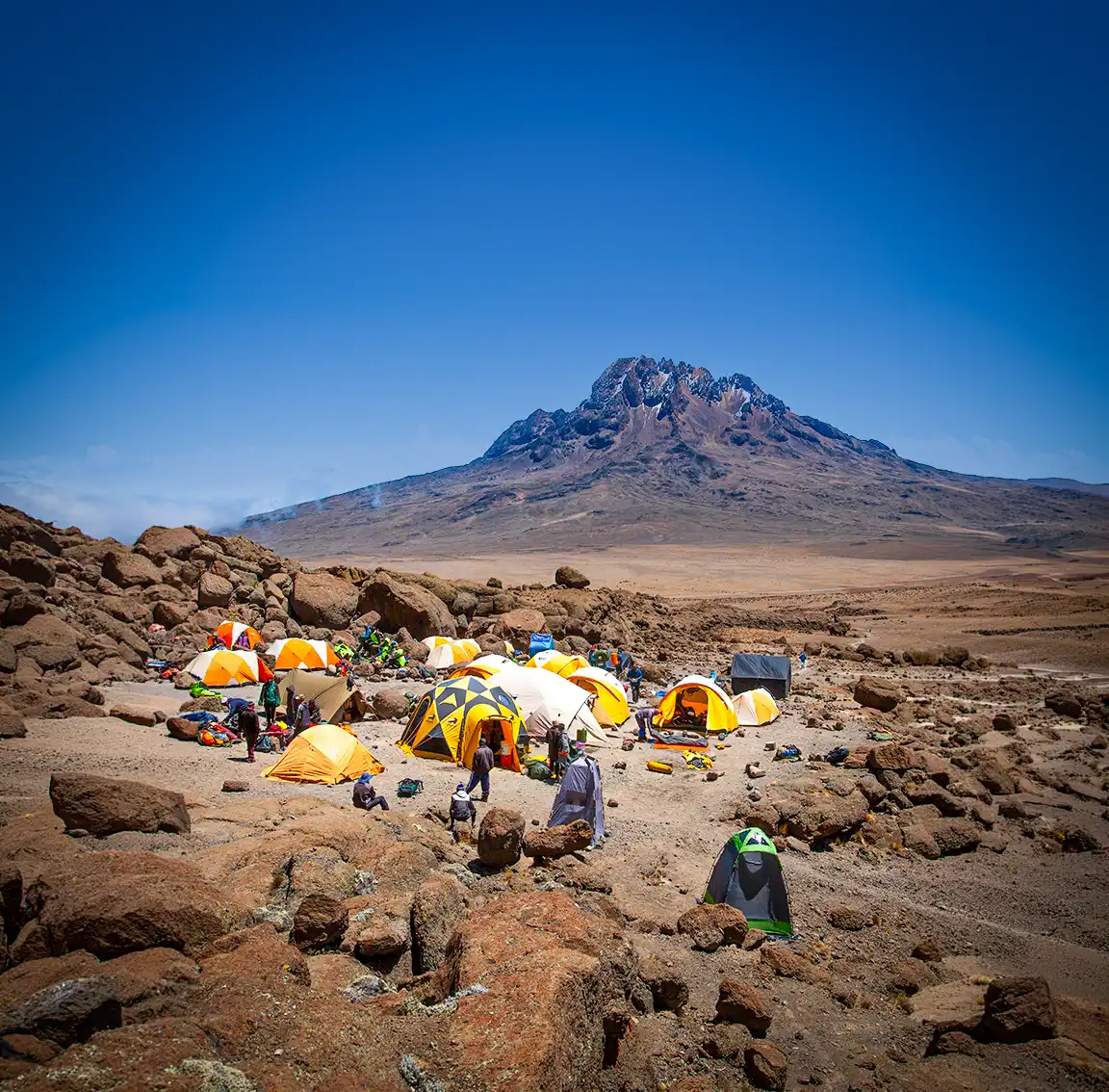
Blanketing the peaks and slopes of Africa’s highest mountain, hiking possibilities are by the dozen in Mount Kilimanjaro National Park. You’ll be able to experience the otherworldly montane heath habitat of the upper reaches while on a hike.
Arusha National Park
This is one of the best Parks in Tanzania for hiking enthusiasts, mainly due to its proximity to Mount Meru. Another added benefit is the ease of access which is just a 45-minute drive from the town of Arusha itself.
Udzungwa Mountains National Park
Protecting the largest range within the Eastern Arc Mountains, this Tanzanian National Park offers an opportunity to hike and see beautiful waterfalls. This hike is done through lush forests that are home to several endemic wildlife species.
African Scenic Safaris
Tanzania, By Activity
Four ways to experience Tanzania, and where each one actually delivers. Jump to what matters to you, or scroll through everything.
Animals, crossings, craters or Kilimanjaro, each one makes the trip experience different. Tell us the activity you would hate to miss, and we will build the whole itinerary around that single choice.
What Rules Should Visitors Follow in Tanzania National Parks?
There are some rules and regulations that visitors must abide by when visiting the national parks on their Tanzania Safari Packages. These rules are for your own safety and the safety of wildlife, as well as to leave as light a footprint as possible on the natural ecosystem. Here are some golden rules that you should always follow. They're drawn from our responsible tourism code of conduct, which every one of our guides and drivers works to.
Driving in the national parks is allowed only between 6 am and 6 pm (except for Tanzania Parks which allow night game drives).
The speed limit in Tanzanian National Parks is 50 km per hour and 25 km per hour in Ngorongoro Conservation Area.
Never feed the animals in the park. This will negatively impact their diet and lead to unnecessary dependence on people.
Stick to authorized trails only.
Camping inside the park is only allowed in designated campgrounds. The same applies to outdoor picnics.
Do not harass or disturb the animals in Tanzania Park in any way. Playing music while on safari is strictly forbidden.
Do not light fires, and if you’re camping, make sure to extinguish the fire carefully.
Drones are not allowed inside the premises of safari parks.
When seeing animals, maintain a minimum distance of 20 meters and pull to the side of the tracks to allow others to pass.
The ecosystem of National Parks depends on a delicate balance. So, make sure to do your part and stick to the above rules so that the natural habitats of Tanzania keep thriving.
How to Plan the Perfect Tanzania National Park Safari
You've now got the parks, the costs, and the seasons. The hard part is turning all that into an actual trip, and most people get stuck at the same place: too many options, no obvious starting point. Here's the order we'd suggest working through it.
Step 1: Start with the one thing you'd hate to miss
Not a list. One thing. Chasing the Migration, trekking chimps in Mahale, standing on the roof of Africa: these pull you in completely different directions, and trying to have all of them in one trip usually means doing none of them properly. Pick your non-negotiable and let the rest fall in behind it.
Step 2: Look at your dates
If they're already fixed by work or the school calendar, that narrows things for you, which is honestly a relief. If they're open, work backwards. Ndutu in January and February when the calves are dropping. The north in August and September for the river crossings. June through October if you just want the best all-round game viewing.
Step 3: Be realistic about how long you've got
Five days is about the floor for the Northern Circuit if you don't want to spend the whole thing in a vehicle. Seven to ten and it stops feeling like a checklist. The thing people regret afterwards is almost never "we should have added another park". It's usually the opposite.
Step 4: Work out roughly what you want to spend
Camping, mid-range lodges, or luxury tented camps will swing the price more than anything else you decide. Have a rough number in mind before you start comparing itineraries, otherwise you're comparing things that aren't comparable. Our Tanzania safari cost guide sets out what each level actually gets you.
Step 5: Find an itinerary that's close, not perfect
Have a look through oursafari packages and pick whichever is nearest to what's in your head. None of them are set in stone. Most of what we end up sending people has been pulled apart and rebuilt anyway.
Step 6: Then just ask someone
This is the step worth doing early rather than last. Twenty minutes with someone who knows where the herds are likely to be in your month, which lodge is worth the extra money and which isn't, and which combination of parks will cost you a day sitting in a car. That's worth more than another fortnight of reading blog posts.
Ready to Start Planning?
Tell us what you're after and we'll build something around it. We'll want to know your dates, who's coming, roughly what you want to spend, and the one thing you'd be gutted to miss. Then we'll send you a route with the costs laid out properly, and we'll keep changing it until it's right.
Park fees, guides, the 4x4, and someone in Tanzania you can actually reach while you're there: all our side. Asking costs nothing and commits you to nothing.
Tanzania National Park PDF
Get a free guide covering Tanzania’s top national parks. Discover key
wildlife highlights, travel seasons, and scenic experiences across this
diverse and iconic safari destination.
Tanzania National Parks Frequently Asked Questions
You can fly to Tanzania from another country and land at Dar es Salaam International Airport, Zanzibar International Airport, Kilimanjaro International Airport, or Arusha International Airport. From there, you can travel to national parks by private jeep or boat. If the park is far, you may need to take another short flight to a smaller airport in mainland Tanzania.
Yes, visitors to the safari parks are required to hire a licensed guide, who will help navigate the parks and provide information about the wildlife and ecosystem.
Yes, there are various initiatives underway. Various conservation organizations and initiatives allow visitors to contribute to conservation efforts in Tanzania's National Parks, such as wildlife monitoring and habitat restoration programs.
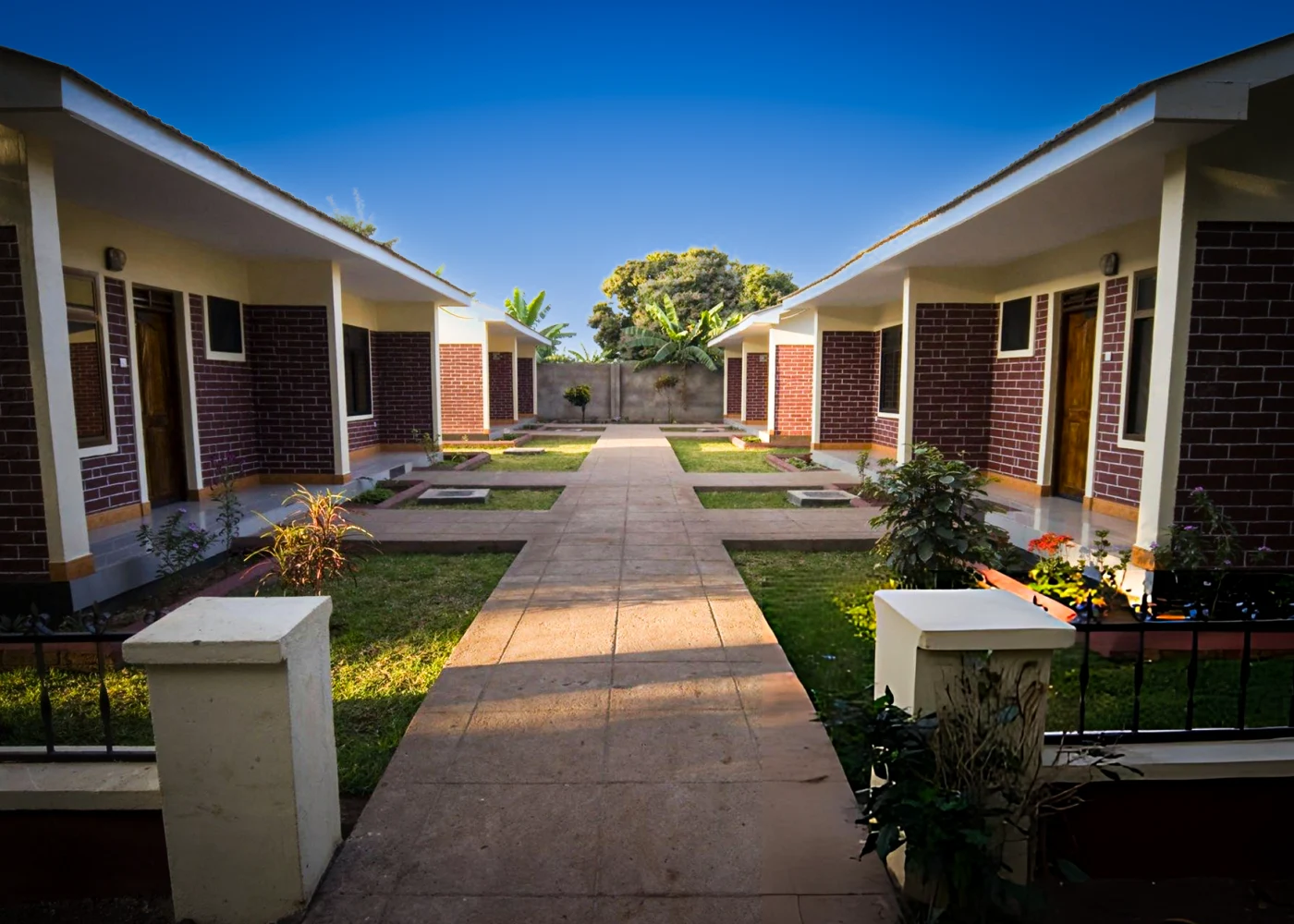
Yes, there are a variety of accommodations available inside the parks, ranging from luxury lodges to camping sites.
The most popular national parks are Serengeti National Park, Ngorongoro Conservation Area, Tarangire National Park, Lake Manyara National Park, and Nyerere National Park.
The Best Time To Visit Tanzania depends on your interests and preferences. The dry season (June to October) is ideal for game viewing, while the wet season (November to May) is great for birdwatching and seeing newborn animals.
National parks are protected areas of land in Tanzania designated and managed by the government for the conservation of wildlife, natural resources, and cultural heritage.
The largest National Park in Tanzania is Nyerere National Park, which covers a total land area of 30,893 square kilometers.
The oldest Tanzanian National Park is Serengeti National Park. It was established in the year 1951.
Tanzania's Game Parks are important habitats for many endangered, vulnerable, and near-threatened species. They also provide breeding sanctuaries for wildlife species that are on the verge of extinction.
Tanzania has 22 number of national parks, including some of the most famous wildlife parks in the world, such as Serengeti National Park, Ngorongoro Conservation Area, and Tarangire National Park.
Serengeti National Park, Tarangire National Park, Ngorongoro Conservation Area, Lake Manyara National Park, and Arusha National Park. These are the top 5 national parks we recommend you visit while on a Safari to Tanzania. Each of them offers special safari activities and experiences that you’ll enjoy.
The most convenient way to pay park fees is by credit card. Most national parks will accept credit cards.
Tanzania National Park Authority (TANAPA) – National Parks like Serengeti National Park, Tarangire National Park, Lake Manyara, and Arusha National Park accept credit cards (Visa or MasterCard).
The Ngorongoro Conservation Area Authority (NCAA) accepts both Visa and MasterCard.
Permits for certain areas must be arranged in advance. The permits can be paid at the entrance via credit cards (MasterCard or Visa). Debit cards and cash are not accepted.
In Ngorongoro Conservation Area, permits can’t be arranged and paid for at the entrance. The tour operator will have to issue your reservation. The permit needs to be paid for at the bank.
Wildlife Management Fees also need to be arranged and paid in advance. The WMA fee applies to controlled wildlife regions outside Tanzania's National Parks.
Wildlife Management Areas are conservation areas set up to help the local communities of Tanzania. They are different from Game Reserves and National Parks. Thus, they have their own entrance fee.
The following are the vehicle and entry fees of Wildlife Management Areas:
Entrance Fees – For Adults: $12, and for children (5-17 years): $6. The fee is valid for 24 hours.
Vehicle Fees: Around 18 TSH ($ 0.077) for 24 hours.
Camping Fees: Around $24 for adults and $12 for children, per person, per night.
The main attractions include the Great Migration in Serengeti, Mount Kilimanjaro, large elephant herds, big cats, chimpanzees, waterfalls, forests, birdlife, and open savannahs. Activities range from game drives and hiking to chimpanzee trekking, balloon safaris, photography, and birdwatching.
Most famous safari animals are also found in other African countries. However, Tanzania protects several endemic species. Udzungwa Mountains National Park is especially important for rare primates, including the Iringa red colobus and Sanje crested mangabey.
Yes. Serengeti National Park and Kilimanjaro National Park are UNESCO World Heritage Sites. Ngorongoro Conservation Area and Selous Game Reserve are also UNESCO-listed protected areas, although they are not included under the listing of national parks; those are the exact names.
Popular activities include game drives, guided walks, mountain climbing, birdwatching, photography, chimpanzee trekking, canoeing, boat safaris, camping, and balloon safaris. Activities vary by park, and some require advance permits or trained guides.
When planning a summer park visit, check the weather, road conditions, accommodation, park fees, permits, and available activities. Tanzania’s dry season from June to October offers easier wildlife viewing but can be busier. Pack sun protection, warm layers, water, and suitable footwear. Book transport and accommodation early, especially for popular parks.
Five days is about the least you can get away with on the Northern Circuit without it feeling like a long drive interrupted by animals. Seven to ten is the sweet spot, enough for three or four parks at a pace that lets you actually sit with a sighting. If you've only got three or four days, don't push for the Serengeti. Do Tarangire and Ngorongoro properly instead.
Serengeti and Ngorongoro together. It's the combination we recommend most often, and for good reason. You get the Big Five, the Migration if your timing lines up, and a morning on the crater floor, which is about as close to guaranteed game viewing as Tanzania gets. Throw in Tarangire if the days allow, mostly for the elephants.
Ngorongoro Crater is your best bet by a distance. People do see all five in a single day there, and it happens often enough that we don't hesitate to mention it. The Serengeti has all five too, though rhino sightings are genuinely rare and worth treating as a bonus rather than an expectation. In Nyerere and Ruaha you'll realistically get four, since rhino aren't really a factor.
Mahale Mountains and Gombe Stream, both on the shore of Lake Tanganyika out west. Mahale has more chimps, Gombe is where Jane Goodall did her work. Neither is a casual add-on. You'll fly in on a small plane or arrive by boat, and the trekking is on foot, uphill, in humid forest. Worth every bit of the effort if you're up for it. June to October is the time to go.
Serengeti, Ngorongoro, and Tarangire. Between them you've got open plains with nothing cluttering the background, a crater packed with predator activity, and baobabs that come alive in early and late light. If you'd rather not have other vehicles creeping into frame, swap in Ruaha. And book a private vehicle. Being able to say "let's stay here another twenty minutes" is the difference between good photos and the ones you'll keep.
SIMBO NATAI
Director
Simbo Natai, founder of African Scenic Safaris, crafts meaningful Tanzanian journeys through local knowledge. His experience as a former Kilimanjaro guide influences how every journey is planned and delivered.
African Scenic Safaris were Amazing. We were a large group of students who climbed Kilimanjaro with them and went on a safari in Tarangire National Park.
"If you would like to know more about how we approach responsible tourism, conservation, community support, or sustainability on your Tanzania journey, please contact Mary directly."
The Tanzania Travel Journal
Tanzania, delivered to your inbox
Get practical travel tips, safari inspiration, Kilimanjaro advice - everything you need to plan your trip with confidence.











 African Scenic Safaris #1 on TripAdvisor